What's the Difference Between ESL, EFL, ESOL, TESOL, TEFL, ESP, and EAP? (And Should You Care?)7/26/2025
By Hadi Golkar Master’s in Applied Linguistics If you’re learning or teaching English, you’ve probably seen these short forms—ESL, EFL, TEFL, TESOL, ESP. They’re everywhere! But what do they stand for? And and how are they different? In this post, we’ll explain each one clearly and simply—so you finally know which is which, and why they matter. We’ll also cover other terms you might come across, including ESOL, EAP, ELL, ELT, and more—giving you a complete guide to the most common English language teaching and learning abbreviations. Let’s begin with the two most commonly used terms. 1. ESL vs. EFL – It All Depends on Where You’re Learning English ESL (English as a Second Language) and EFL (English as a Foreign Language). ESL is what we call it when someone is learning English in an English-speaking country—think students from Korea, Brazil, or Turkey who move to the U.S., the U.K., or Australia and need English to live, work, or survive grocery shopping. EFL, on the other hand, is used when someone is learning English in a non-English-speaking country. Key difference? It’s all about environment. ESL learners are immersed in English daily; EFL learners aren’t. It’s like learning to swim by jumping in the ocean vs. reading a manual on dry land. What about ESOL? ESOL stands for English for Speakers of Other Languages. Similar to ESL, it refers to English classes for people living in English-speaking countries, but the term is more commonly used in public education and adult learning programs outside the U.S., especially in the UK. 2. TESOL vs. TEFL: So You Wanna Teach English? If you're thinking of teaching English, these terms are your new best frenemies. TESOL stands for Teaching English to Speakers of Other Languages. It’s the umbrella term. It covers both ESL and EFL teaching. A TESOL-certified teacher might work in Chicago with recent immigrants or in Seoul teaching at a private language school. Think of TESOL as the big umbrella in the world of English teaching—covering any English language learner, anywhere, anytime. TEFL stands for Teaching English as a Foreign Language. It's more specific: it refers to teaching English in a country where English is not the primary language. Teaching business English to adults in Prague or helping elementary kids in Dubai learn the alphabet. So which one should you get certified in? Well, TESOL is often used in academic settings or in the U.S./Canada, while TEFL is the ticket for those looking to teach abroad. 3. ESP: Not a Superpower, Just a Specialization Now let’s talk about ESP—English for Specific Purposes. ESP means teaching English tailored to a specific field or profession. Here are some examples:
ESP is for learners who don’t want to chat about the weather—they want English for getting stuff done in their profession. 4. EAP (ELAP): Should We Talk About It? EAP stands for English for Academic Purposes, also known as ELAP (English Language for Academic Purposes). It’s actually a subcategory of ESP, focused on students who need academic English to survive (and ideally thrive) in English-speaking universities. A student from Saudi Arabia preparing for a Master’s degree in engineering in Canada and trying to understand how to write a “literature review” without getting stuck in Shakespeare. Should we compare ESP and EAP? Only if you’re deep into curriculum design. 5. Other Common English Learning Abbreviations (ELL, EL, ELA, ENL, ELT, EIL, ELD) You’ll also see other abbreviations used mainly in the United States, especially in school systems and education-related job ads. ELL (English Language Learner) and EL (English Learner) refer to students who are actively learning English, and are widely used in U.S. K–12 education. ELA (English Language Arts) describes the general school subject covering reading, writing, and grammar in American curriculums. In some regions like New York, ENL (English as a New Language) is used instead of ESL. On the other hand, ELT (English Language Teaching) is a broader, international term commonly used in academic and professional circles around the world. EIL (English as an International Language) refers to the use of English as a global means of communication, especially between non-native speakers from different language backgrounds. ELD (English Language Development) is often used in U.S. K–12 education to describe structured programs that help English learners build language skills across reading, writing, speaking, and listening—especially when integrated into core subject areas. While similar to ESL, ELD typically refers to curriculum-based instruction aligned with academic standards. Abbreviations That Matter
Whether you're learning, teaching, exploring the field, or just trying to impress someone at a conference, understanding these terms helps you navigate the world of English language education—complete with its own unique terminology. Now, go ahead and throw one of these acronyms into your next conversation. Just be careful with ESP—someone might mistake you for a fortune teller (Extrasensory Perception) instead of a language teacher! * Copyright Notice: You may use this post with proper credit and a direct link to the original page.
2 Comments
Have you ever mistaken Persian for Arabic and wondered if Iranians speak Arabic because Iran is in the Middle East? It's a common misconception that can be both amusing and enlightening to clear up. Let's dive into the fascinating distinctions between Persian (Farsi) and Arabic, two languages with rich and diverse cultural legacies. When comparing the two, some say Persian sounds like poetry set to music, while Arabic feels like a rhythmic drumbeat, energizing and bold in every conversation.
The Alphabet: Similar Looks, Different Sounds At first glance, Persian and Arabic scripts look similar, which can lead to confusion. Both languages use the Arabic script, but there are key differences. Arabic has 28 letters, while Persian (Farsi) has 32. Persian includes four extra letters to accommodate sounds that don’t exist in Arabic, like "پ" (p), "چ" (ch), "ژ" (zh), and "گ" (g).
Language Features: Apples and Oranges When it comes to grammar and structure, Persian and Arabic are as different as coffee and tea—both delightful, but with their own distinct flavors and brewing methods! Persian is an Indo-European language, meaning it shares roots with languages like English, French, and Hindi. This connection traces back to the ancient Indo-European language family, which evolved over millennia. Modern Persian, or Farsi, developed around the 9th century and has absorbed influences from Arabic, Turkish, French, and English. Arabic, on the other hand, is a Semitic language, related to Hebrew and Aramaic. In Persian, verbs generally come at the end of the sentence. For example:
Cultural Tidbits: Iran and the Arab World Geography lesson time! Iran is not an Arab country. It's a Persian-speaking nation with a rich history that predates the arrival of Islam. The great Iranian civilization has contributed immensely to art, science, and culture over millennia. While Arabic is the official language of many countries in the Arab world, Persian (Farsi) is the official language of Iran, and its different variants are also spoken in parts of Afghanistan and Tajikistan. Now, let’s sprinkle in a little humor. Imagine going to Iran and greeting someone with "Marhaba" (hello in Arabic) instead of "Salam" (hello in Persian). You might get a polite smile, but it’s like walking into a French bakery and asking for a burrito. Language and Identity: Language is a significant part of cultural identity. Persian poetry, with luminaries like Rumi and Hafez, has a profound influence on Persian culture. Their works have transcended borders, influencing not only Iran's neighboring countries but also literary traditions around the world. A well-known verse by Rumi: هر کسی از ظن خود شد یار من از درون من نجست اسرار من "Everyone became my friend from their own perspective None sought out my secrets from within me." A celebrated couplet by Hafez: دوش وقت سحر از غصه نجاتم دادند واندر آن ظلمت شب آب حیاتم دادند "Last night, at dawn, they delivered me from sorrow And in that darkness of the night, they gave me the water of life." Arabic, with its classical and modern literary tradition, has shaped the Arab world in countless ways. Each language carries the soul of its people, their history, and their worldview. Final Thoughts Understanding the differences between Persian (Farsi) and Arabic can deepen your appreciation for the diverse tapestry of the Middle East and its neighboring regions. So, the next time you hear someone confusing the two, you can set the record straight with a smile and a bit of knowledge. Remember, Persian is the language of Iran, with its unique alphabet and structure, while Arabic is the dominant language of the Arab world, each beautiful in its own right. * Copyright Notice: You may use this post provided you include the source and a URL link to the page. Click Here for Persian Classes
By Hadi Golkar
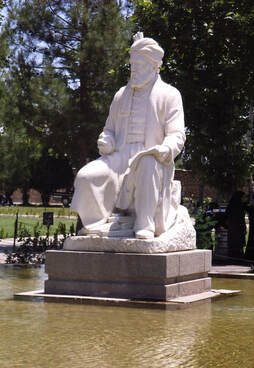
Master’s in Applied Linguistics Ferdowsi, the author of Shahnameh ("Book of Kings"), the greatest epic poem.
It is actually a legitimate question. So, let's go ahead and break it down. You have frequently noticed that some people in academia, businesses, or for job postings call it Farsi or Persian Farsi. Some folks go even further, and in order to find the right speakers of the language for their own purposes and needs, try to shed more light on it, customize it a little bit more and suggest it as Iranian Farsi! Although you might say this last combination seems to clarify what we’re trying to say, it is not recommended at all! Still confusing, I know! Bear with me. So, what is finally the correct way to say it? Okay, let's put it this way: What do you call the language which is spoken in Italy? Of course you know it, it is called Italian. But how do people in Italy actually name their own language? If you are curious to know, they call it Italiano (or Italiana). Now, if you are in Italy, you should definitely use the word Italiano. But if you are in the United States, you call it Italian because this is how we use the word in English, right? Even an Italian does the same if they live here in the States, and they would tell you: I speak Italian, not Italiano, makes sense? So, by the same token, people in Iran call the language "Farsi", not Persian while they are in Iran, but the same people, if they live in an English-speaking country, they call it, or better say, they should call it "Persian" as it is the English word for Farsi, and so should we when we refer to the language that is spoken in Iran.
Your next legitimate question: But I have heard many Iranian nationals in the States or in the west who call it Farsi, how come? And you heard it right. Since it is widely spoken in social media and especially with the globalization in place, they may do so. However, if you want to articulate it in an official/academic setting or in an article, a book, or in a presentation, "Persian" is the right word.
On the other hand, Iranians are very sensitive to what they call the "correct" way, that is the word Persian, outside of Iran for two main reasons: First, it goes back to the great civilization they rightly cherish at the time when their great empire was called "Persia" and the language named after it as Persian, and that is why we now use the word "Persian" in English. Second, it distinguishes Persian from other versions of the Farsi language as it is spoken in Afghanistan which is called "Dari' or some prefer to say "Farsi Dari", or what is spoken in Tajikistan called "Tajiki". People in these three countries may understand each other, for the most part, but the three variants of the language are differentiated from each other by sentence structure, dialect, vocabulary usage and even verb conjugation. So, if you just call the language "Farsi", it may not be that clear which specific region you are referring to; however, expressing the word as "Persian" precisely indicates the language which is spoken in Iran.
And last but not least, you might have noticed, mainly in some history books, the word Persia for the name of the country and you are wondering what you should call it Iran or Persia. The answer is one word, Iran. It was back in 1935 that Reza Shah, the then king of Iran, while celebrating Nowruz [nəu'ru:z], the Iranian New Year (also celebrated in Afghanistan and Tajikistan), asked foreign delegates to call the country "Iran" in formal correspondence. Since then, the official name of the country was determined to be Iran and all Iranians honor this and use it proudly as their country of origin around the globe.
* Copyright notice: You may use this post provided you include the source and a URL link to the page.
|


RSS Feed