Speak Bilingual LLC, Foreign Language Institute
(+1) 703.951.7745      
​[email protected]
  • Home
  • European Languages
  • Middle Eastern
  • English
  • Online Classes
    • On-Demand Persian Courses
    • Persian DLPT
    • Arabic DLPT
    • Russian DLPT
    • Spanish Class
    • Far Eastern
  • Persian-Farsi
  • DLPT
  • About
    • About Us
    • Blog
    • Contact Us
    • Careers

Persian or Farsi, that's the question! What's the Difference, and Which Term Is Correct?

6/26/2020

 
By Hadi Golkar
Master’s in Applied Linguistics
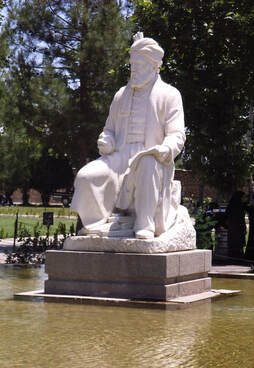
Persian or Farsi, which one is correct to sayFerdowsi, the author of Shahnameh ("Book of Kings"), the greatest epic poem.

​It is actually a legitimate question, and one that has puzzled students, employers, educators, and language enthusiasts for years.

You may have seen the language referred to as Persian, Farsi, Persian-Farsi, or what some people call Iranian Farsi. While this last combination may seem to provide additional clarity, it is not recommended at all.

The real question is not whether Persian and Farsi are different languages—they are not. Rather, it is why a single language came to have two widely used names and why people continue to debate them today.

So, what is the correct way to say it?

​Let's look at a simple example. What do we call the language spoken in Italy? In English, we call it Italian. Yet Italians themselves call their language Italiano. If you are speaking Italian in Italy, you would naturally use the native term. However, when speaking English, we use the English equivalent: Italian. Nobody writes "I speak Italiano" on a résumé written in English.
Persian follows the same logic, although it seems to generate considerably more debate.

People in Iran call their language Farsi because that is the name of the language in Persian. However, in English, the traditional and historically established name is Persian. Therefore, when referring to the language of Iran in English, Persian is generally the preferred term.

At this point, many readers raise an entirely reasonable objection:
"But I know many Iranians living in the United States, Canada, Europe, and elsewhere who still call the language Farsi. How can that be?"
​
The explanation is simple. Because of globalization, social media, and increased contact between Persian speakers and the rest of the world, the term Farsi has become widely recognized outside Iran. Consequently, many native speakers use it even while speaking English. There is nothing unusual or incorrect about that.

Nevertheless, in academic, educational, professional, and other formal contexts, Persian remains the preferred English term.​

Looking for Live Farsi Classes?
Click Here
Why the Distinction Matters: Persian, Dari, and Tajiki

​Much of the confusion surrounding the terms Persian and Farsi stems from the fact that Persian, Dari, and Tajiki are often treated as interchangeable in English, even though they represent distinct national standards with important linguistic and cultural differences.

Although these three varieties share a common historical origin and remain related, understanding the distinctions among them is important for language learners, translators, and anyone interested in the Persian-speaking world.

Iranians are quite particular about using what they consider the correct English term, Persian, outside Iran, for two main reasons.

First, the word Persian reflects the rich historical and cultural identity that many Iranians rightly take pride in. It dates back to the time when their illustrious empire was known as Persia, and the language came to be known in English as Persian. That historical legacy explains why English continues to use the word Persian today.

Second, the term Persian distinguishes the language spoken in Iran from its other major varieties. In Afghanistan, the official name of the language is Dari, although some people prefer the term Farsi Dari. In Tajikistan, it is known as Tajiki. Speakers from these three countries may understand one another for the most part, but the three varieties differ significantly in pronunciation, vocabulary, grammar, verb conjugation, idiomatic expressions, and many common sentence patterns and grammatical constructions. These differences are especially important for non-native learners who wish to study the standard language of a particular country.

Each of these varieties has its own beauty, literary tradition, cultural heritage, and musical expression, and each deserves to be recognized on its own merits. However, treating them as identical or presenting them as interchangeable can mislead readers and language learners about the linguistic and cultural distinctions that exist among them.
​
As a result, simply referring to the language as Farsi may not clearly indicate which regional variety you mean. By contrast, in this article, the term Persian refers specifically to the language of Iran, while Dari refers to Afghanistan and Tajiki refers to Tajikistan.
Your browser does not support the video tag.
Click to Learn More and Register

​Iran or Persia? 

If the language is called Persian, should the country be called Persia or Iran?


The answer today is straightforward: the country is Iran.

Historically, however, the Western world commonly referred to the country as Persia. As a result, older history books, travel accounts, and scholarly works frequently use the name Persia.

​In 1935, during the reign of Reza Shah Pahlavi, foreign governments were formally requested to use the name Iran in official correspondence. The request was made in connection with the celebration of Nowruz (Norooz) [nəu'ruz], the Persian New Year, which is observed not only in Iran but also in parts of Afghanistan, Tajikistan, and several other regions influenced by Persian culture. Since that time, Iran has been the internationally recognized name of the country. 

One final note: the country's name is pronounced Iran /Ira:n/ (ee-ra:n), not "I ran!" The distinction may seem small, but to native speakers it is about as noticeable as calling Italian "Eye-talian."

While the country is known today as Iran, many aspects of its historical and cultural heritage continue to be described as Persian. We still speak of Persian literature, Persian carpets, Persian miniature painting, Persian architecture, Persian poetry, and, of course, the Persian language.
​
As a result, modern travelers visit Iran, historians write about Persia, and both are often referring to the same country, just from different historical perspectives.

​
So, Which Term Should You Use?

​The practical answer is simple:
  • When speaking Persian, use Farsi.
  • When speaking English, use Persian.
  • In academic, educational, and professional contexts, Persian is generally the preferred term.
  • If someone uses Farsi in English conversation, they are still referring to exactly the same language.

In the end, the debate is not really about two different languages. Persian and Farsi are simply two names for the same language viewed from different linguistic and cultural perspectives.
​
Once that distinction is understood, the mystery largely disappears—although the debate itself will probably continue for many years to come.
​
So, despite decades of discussion, the answer to "Persian or Farsi?" is surprisingly simple: both are correct—but not in the same context.​
​* Copyright notice: You may use this post provided you include the source and a URL link to the page.
​

Comments are closed.

    ​Author

    ​SpeakBilingual.com

    Archives

    July 2025
    June 2020

    Categories

    All

    RSS Feed

    View my profile on LinkedIn
    Click Here for Persian (Farsi) Courses
    DLPT / OPI Prep Classes
    ESL Classes by Experienced Instructors
European Languages
Middle-Eastern
ESL (English Classes)
On-Demand Persian Courses​
​DLPT/OPI Classes
​Blog
​Careers
​About Us
Contact Us
​​Phone: 703-951-7745
[email protected]
[email protected]
​
[email protected]
[email protected]
11710 Plaza America Dr,
​Reston, VA 20190
Contact Us
Linkedin
X (Twitter)
Instagram
TikTok
YouTube

       Copyright © 2014-2026 Speak Bilingual, LLC
​         All Rights Reserved.